
Benefits of All-On-4 Dental Implants
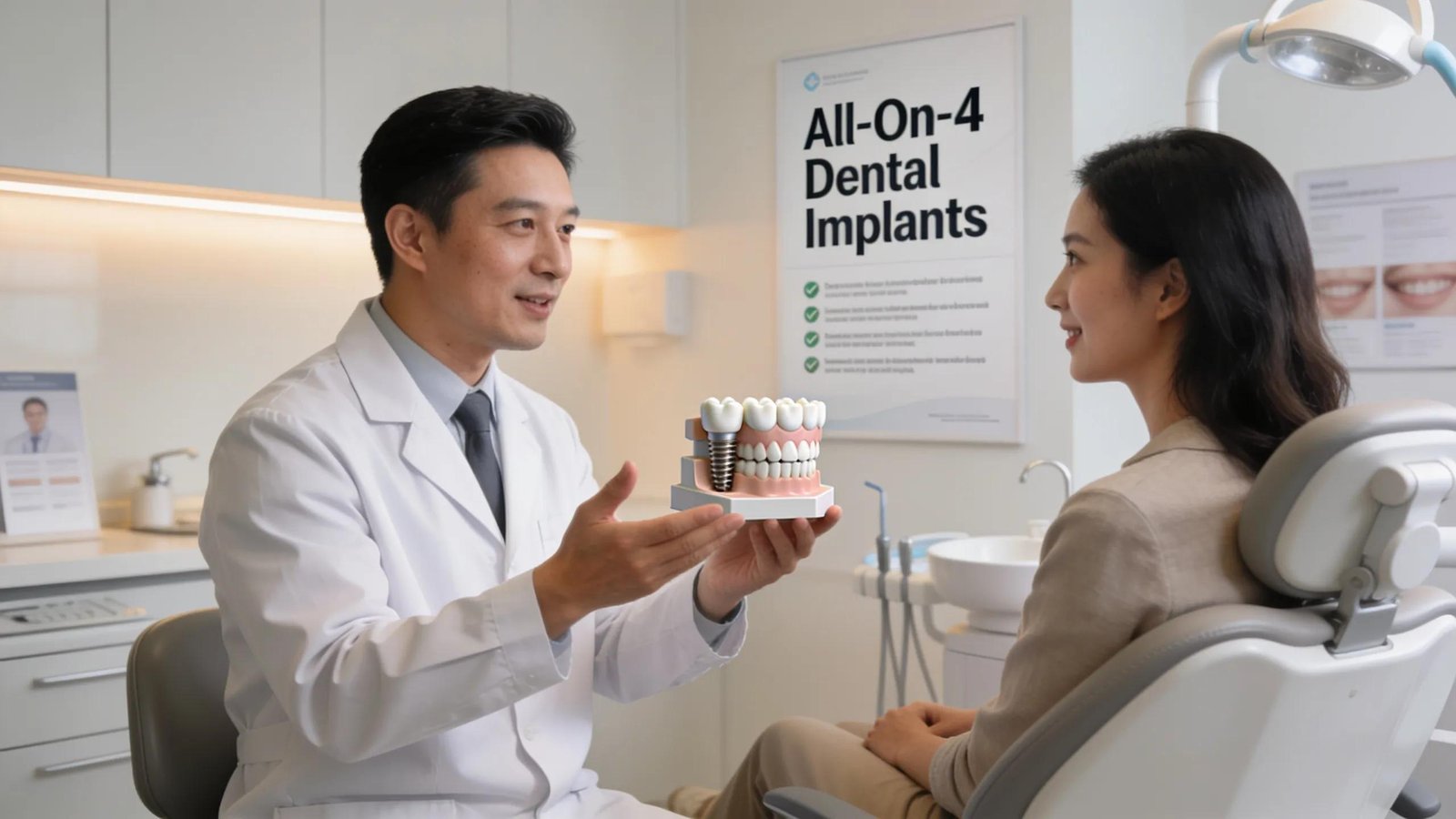
The Benefits of All-On-4 Dental Implants for Your Smile
By Michael Carmy, Dental Care of Rialto
All‑On‑4 dental implants are a stable, long‑term solution for full‑arch tooth replacement. Four strategically placed titanium posts support a fixed prosthetic arch that restores chewing and speech, improves facial appearance, and can enhance quality of life. This overview summarises the method, clinical advantages over traditional options and patient implications to inform treatment choices.
What Are All-On-4 Dental Implants and How Do They Work?
All‑On‑4 secures a full prosthetic arch on four implants, with posterior implants angled to use denser bone and often avoid extensive grafting. The technique frequently supports immediate loading, so temporary prosthetic teeth may be placed the same day to speed recovery of function and appearance.
Design and Functionality
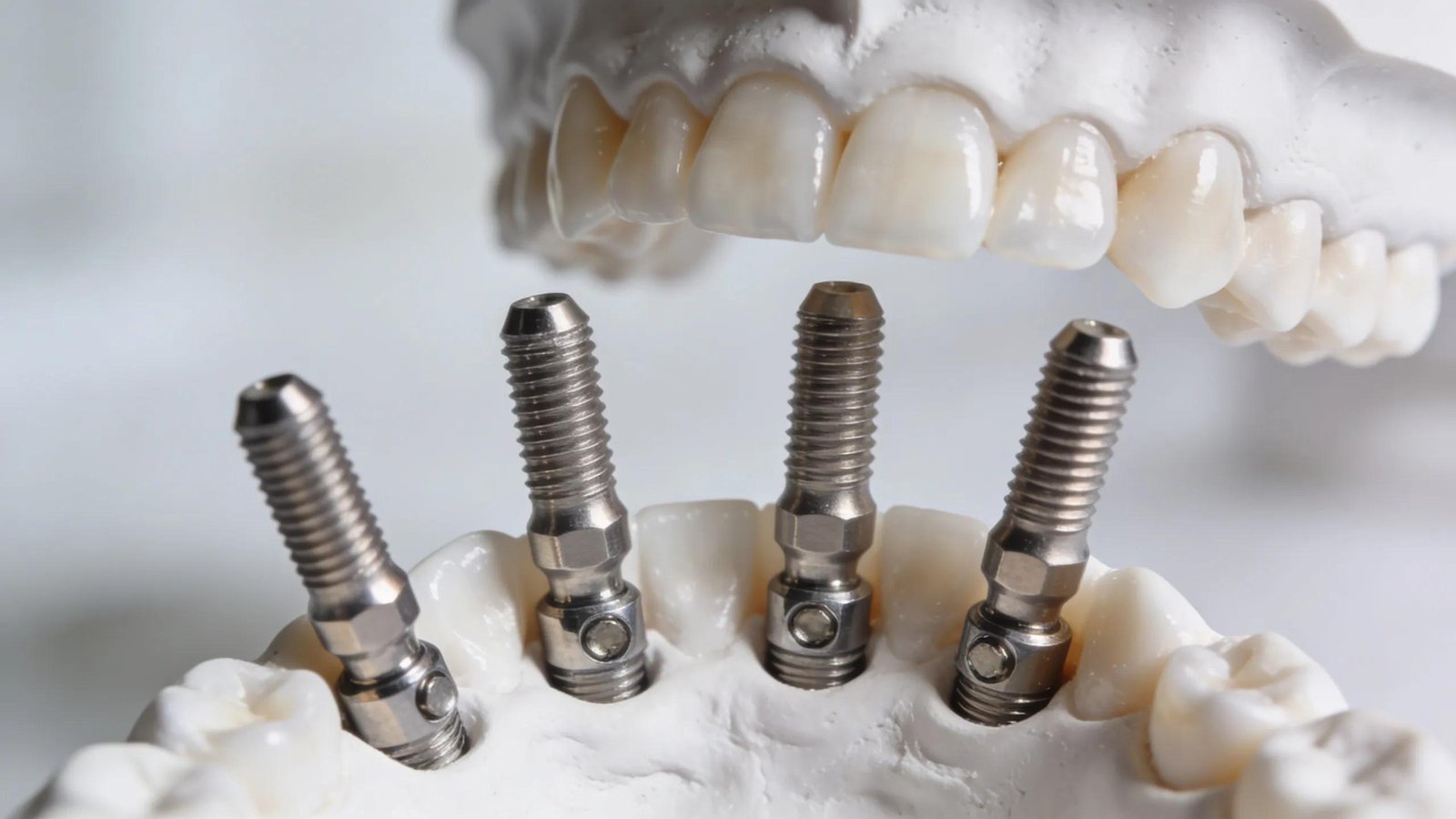
The usual configuration places two anterior implants vertically and two posterior implants angled to engage available bone, increasing prosthetic support and reducing grafting needs. Titanium posts osseointegrate with the jaw, forming a durable foundation for the fixed arch.
Understanding the framework materials and cantilever length is crucial in determining stress distribution.
All-On-4 Implant Design: Framework Materials and Stress Distribution
With global ageing, the number of edentulous individuals is increasing. All‑on‑4 restoration can substantially recover masticatory function in these patients. This study examines how framework material and cantilever length affect stress distribution in All‑on‑4 components using three‑dimensional finite element analysis, providing clinicians with guidance on superstructure design to improve outcomes.Biomechanical analysis of All-on-4 implant supported framework using different materials across various clinical practice, K Gai, 2025
Advantages Over Traditional Implants
All‑On‑4 typically needs fewer implants and shorter surgical time than conventional full‑arch protocols, which can reduce costs and recovery time. Patients commonly report less post‑operative discomfort and improved comfort, function and appearance compared with more complex implant plans.
What defines the All-On-4 implant system?
The system pairs a reduced implant count with immediate‑load capability so a fixed prosthesis can be attached soon after surgery. By using existing bone efficiently, it offers a simpler alternative for patients with extensive tooth loss or jawbone resorption.
Minimizing jawbone stress is a key consideration in optimizing All-On-4 implant design for improved longevity and outcomes.
Optimizing All-On-4 Design to Minimize Jawbone Stress
The all‑on‑four concept is widely used to rehabilitate edentulous arches, but its biomechanical impact on supporting bone requires evaluation. This study used three‑dimensional finite‑element analysis based on mean mandible dimensions to test implant positions (lengths 12–16 mm, diameters 3–5 mm) and posterior implant angles (1–45°). A rigid superstructure and an occlusal load of 50 N were modelled. The optimisation identified eight configurations with a peak Von Mises cortical stress of 2.26 MPa, a 32% reduction compared with earlier findings, indicating that the optimized designs can reduce cortical bone stress while accommodating anatomical variability and may improve implant longevity and outcomes.
Enhanced implant longevity: Finite element optimization of all-on-four implant designs to minimize jawbone stresses, K Ahmed, 2025
How does the All-On-4 procedure differ from traditional implants?
Key differences are the reduced implant number—four instead of six or more—and angulated posterior implants. This often enables immediate prosthetic attachment, making the surgery less invasive and recovery quicker than some traditional approaches.
What Are the Key Advantages of All-On-4 Implants Compared to Traditional Dentures?

All‑On‑4 provides a fixed prosthesis with greater stability and comfort than removable dentures. It restores chewing and speech more reliably, supports facial contours and typically increases patient confidence and overall satisfaction.
How do All-On-4 implants improve stability and oral function?
A fixed All‑On‑4 prosthesis resists shifting or loosening, improving bite force and chewing efficiency so patients can eat a broader diet. Osseointegration preserves jawbone volume and helps prevent the bone loss often seen with removable dentures.
Considering the biomechanical advantages of various implant approaches, especially in cases of asymmetrical mandibular atrophy, is crucial for optimal patient outcomes.
All-On-4 Biomechanics: Addressing Mandibular Asymmetry
Clinical cases often present asymmetrical mandibular atrophy, prompting the question whether to follow the standard All‑on‑4 protocol or to place vertically oriented implants where bone volume permits. This study uses three‑dimensional finite element analysis to compare the biomechanical merits of each approach and to inform clinical decision‑making.Comparative biomechanics of all-on-4 and vertical implant placement in asymmetrical mandibular: a finite element study, 2024
What aesthetic and quality-of-life benefits do permanent dentures provide?
All‑On‑4 often restores a natural appearance that supports facial structure and prevents the sunken look of tooth loss. Patients frequently report reduced anxiety about their teeth, greater willingness to socialise and lasting emotional as well as oral health benefits.
Who Is Eligible for All-On-4 Implants and What Does the Treatment Involve?
Eligibility follows a clinical assessment of oral health and jawbone condition. Typical candidates have adequate bone density or are suitable for limited grafting. The treatment path includes consultation, surgery and follow‑up visits for prosthetic adjustments.
What patient factors determine eligibility for All-On-4 implants?
Selection depends on general health, oral hygiene, smoking status and lifestyle. Bone quality and overall dental condition are evaluated to ensure predictable integration and to plan any necessary adjunctive procedures.
What is the typical timeline and process for All-On-4 dental implant treatment?
Treatment usually proceeds in stages: planning, a surgical visit when implants are placed (often in one session), and a healing phase of days to several weeks. Final prosthetic teeth are commonly delivered after a few months once integration and precise fitting are achieved.
What Are the Cost Considerations and Aftercare Recommendations for All-On-4 Implants?
Costs depend on case complexity and materials, but many patients view All‑On‑4 as cost‑effective over time compared with recurring denture costs. Post‑operative care—meticulous oral hygiene and regular dental reviews—is essential to implant longevity.
How cost-effective are All-On-4 implants compared to other tooth replacement options?
Over time, All‑On‑4 often proves a favourable investment: higher upfront costs can be offset by greater durability and fewer adjustments compared with removable dentures.
What aftercare practices promote longevity and success of All-On-4 implants?
Maintain careful oral hygiene, use interdental cleaning, attend scheduled appointments and follow dietary guidance during healing. A balanced diet supports recovery and protecting the prosthesis in early stages reduces complications.
Frequently Asked Questions
1. How long do All-On-4 dental implants last?
With good care and regular dental reviews, All‑On‑4 implants can last many years and often exceed a decade; outcomes depend on hygiene and overall health.
2. What potential complications should patients be aware of?
Complications can include infection, implant failure and, rarely, nerve injury. Post‑operative pain and swelling usually resolve; prosthetic problems should be addressed promptly. Thorough medical history and adherence to aftercare reduce risk.
3. Are All-On-4 implants suitable for smokers?
Smoking impairs healing and increases complication risk. Smokers may still be candidates, but clinicians often recommend cessation before and after surgery to improve success rates.
4. How does the bone quality affect the All-On-4 implant procedure?
Bone quality is critical for implant stability; low density may require grafting or modified planning. Angling posterior implants often reduces grafting needs, but individual assessment is needed.
5. What care is required after receiving All-On-4 implants?
Post‑operative care includes excellent oral hygiene, temporary dietary changes and regular check‑ups. Avoid hard or sticky foods during early healing and follow professional advice to protect the prosthesis.
6. Can All-On-4 implants be replaced if needed?
If implants fail from infection, mechanical issues or bone loss, they can be removed and replaced; the replacement plan depends on bone integrity and the clinical situation.
7. What factors influence the total cost of All-On-4 implants?
Cost reflects procedure complexity, implant and prosthetic materials, imaging, anaesthesia and follow‑up care. Many clinics offer financing and comparing options helps balance cost and quality.
Conclusion
All‑On‑4 dental implants are a durable, comfortable and aesthetic full‑arch replacement that can improve function and quality of life. Their streamlined design often reduces surgical time and shortens recovery versus more complex protocols. Patients choosing All‑On‑4 typically gain lasting oral health benefits and increased confidence; consult a specialist to discuss personalised treatment options.