
All-On-4 Dental Implants vs. Traditional Dentures
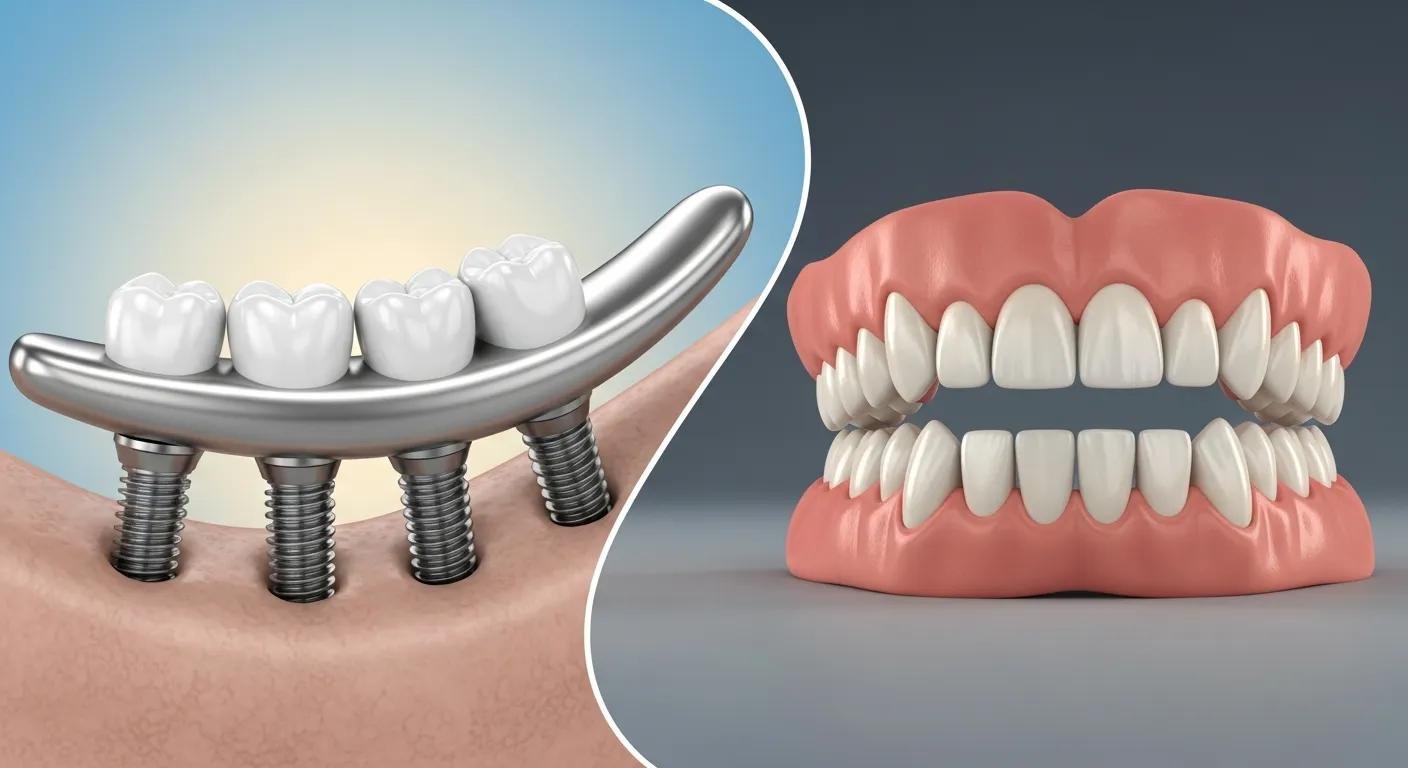
All-On-4 Implants vs. Dentures
Choosing the right way to replace missing teeth affects more than your smile — it affects eating, speaking, and how confident you feel each day. Below, we compare All-On-4 dental implants and traditional dentures so you can understand how each option works, what to expect for comfort and oral health, and which patients are most likely to benefit. All‑On‑4 offers a fixed, long-term solution that behaves much like natural teeth, while traditional dentures are a removable, time-tested option. This guide walks through both approaches — their benefits, limitations, costs, and who makes a good candidate for each.
What Are All-On-4 Dental Implants and Traditional Dentures?
All‑On‑4 dental implants are a modern approach to restoring a full arch. The treatment uses four strategically placed titanium posts in the jaw to support a complete set of prosthetic teeth. In many cases, the method allows for immediate or same‑day temporary teeth so patients leave with a working smile right away.
Traditional dentures are removable prostheses that replace some or all missing teeth. They can be full (for a complete arch) or partial (filling gaps). Usually made from acrylic and other biocompatible materials, dentures restore appearance and basic function but often need adjustments and don’t offer the same anchored stability as implants.
How Do All-On-4 Dental Implants Work for Full Mouth Restoration?
The All‑On‑4 process starts with a detailed exam of your mouth and jawbone. If you’re a candidate, the dentist places four titanium implants at specific angles to maximize support — a technique that often reduces the need for bone grafts. A temporary prosthesis is attached so you can eat and smile while the implants integrate with the bone (osseointegration). Over several months the implants fuse with the jaw, creating a durable foundation for your final prosthesis.
What Are Traditional Dentures and Their Types?
Traditional dentures come as complete or partial devices. Complete dentures replace all teeth in an arch, while partials fill gaps between remaining teeth. They’re custom made to fit your mouth and generally rely on suction or adhesive to stay in place. Dentures can restore function and appearance but may require relining or replacement over time and can sometimes cause soreness or difficulty with certain foods.
What Are the Key Differences Between All-On-4 Implants and Traditional Dentures?
When weighing All‑On‑4 against traditional dentures, the main differences are stability, comfort, and overall function.
How Do Stability and Comfort Compare Between All-On-4 and Dentures?
All‑On‑4 implants are fixed to the jawbone, so they won’t slip or shift. That anchored stability usually translates to better comfort and confidence when eating and speaking. Traditional dentures are removable and can move during use, sometimes requiring adhesives and periodic adjustments, which some patients find inconvenient or uncomfortable.
What Are the Differences in Functionality: Chewing and Speech?
Because implants are secured to the bone, chewing power and bite feel more natural with All‑On‑4, and many patients notice clearer speech. Removable dentures work well for basic eating and talking, but they can shift and may limit what you can comfortably bite into or chew without worry.
How Do Oral Health and Bone Preservation Differ Between These Options?
Preserving jawbone and gum health is an important long‑term consideration when choosing between implants and dentures.
How Do All-On-4 Implants Prevent Jawbone Loss?
All‑On‑4 implants stimulate the jawbone through osseointegration — the same way natural tooth roots do. That stimulation helps maintain bone volume and facial structure, reducing the “sunken” appearance that can develop after tooth loss.
What Are the Effects of Traditional Dentures on Bone and Gum Health?
Dentures restore appearance and function but do not stimulate the jawbone. Over time, lack of stimulation can lead to bone resorption, which may change how dentures fit and require relines or replacements. Dentures can also irritate gums if the fit becomes compromised.
Key Differences: All-On-4 Implants vs. Traditional Dentures
Cost is a major factor for most patients. Consider both upfront expenses and long‑term value.
How Does the Initial Cost of All-On-4 Compare to Traditional Dentures?
All‑On‑4 implants usually cost more up front because of the surgical procedure, implant hardware, and customized prosthesis. Dentures are less expensive initially, which makes them a practical option for many patients.
What Are the Maintenance and Replacement Costs Over Time?
Implants generally need less frequent replacement and lower ongoing maintenance once healed, which can make them more cost‑effective over the long run. Traditional dentures often require relines, repairs, and periodic replacement (commonly every 5–8 years), adding to lifetime cost.
Who Is a Suitable Candidate for All-On-4 Dental Implants or Traditional Dentures?
Choosing the right option depends on oral health, medical history, and personal preference.
What Factors Determine Candidacy for All-On-4 Implants?
Good candidates for All‑On‑4 are typically people with extensive tooth loss who have enough jawbone to support implants. Because of the angled placement, All‑On‑4 often works for patients with some bone loss without needing grafts. A complete clinical evaluation and imaging help determine candidacy.
When Are Traditional Dentures Recommended?
Dentures are a recommended choice for patients who aren’t good surgical candidates, have very low bone volume, or prefer a non‑surgical, removable option. They provide a reliable way to restore a smile without implant surgery.
Why Choose Dental Care of Rialto for Your All-On-4 or Denture Solutions?
Expertise, personalized care, and patient comfort make a difference in outcomes — and that’s what we aim to provide.
What Expertise Does Dr. Carmy Bring to Dental Implantology?
Dr. Carmy is an experienced implant specialist and founder of the Dental Implant Institute. His training and years of practice give patients confidence that their implant treatment is planned and executed with skilled, up‑to‑date techniques.
How Does Dental Care of Rialto Ensure Patient Comfort and Advanced Care?
At Dental Care of Rialto, we combine modern technology with a patient‑first approach to keep you comfortable from consultation through recovery. Our team customizes treatment plans and supports you at every step so you get a result that fits your goals and lifestyle.
Frequently Asked Questions
What is the recovery process like after getting All-On-4 implants?
Initial recovery after All‑On‑4 usually involves some swelling and mild discomfort, which we manage with medication and care instructions. Many patients return to light activities within a few days, though full healing and bone integration take several months. We schedule follow‑ups to monitor healing and guide your progression to the final prosthesis.
Can All-On-4 implants be placed in patients with diabetes?
Yes — patients with well‑controlled diabetes can often receive All‑On‑4 implants. Controlled blood sugar improves healing and reduces complications. Uncontrolled diabetes increases risks, so a careful medical review and coordination with your physician are important before moving forward.
How do All-On-4 implants affect daily oral hygiene routines?
Caring for All‑On‑4 implants is similar to caring for natural teeth: brush twice daily, clean between teeth and under the prosthesis as instructed, and use antibacterial rinses when recommended. Regular dental visits help us check implant health and catch any issues early.
What lifestyle changes might be necessary after getting dentures?
Adjusting to dentures often means starting with softer foods and practicing speech until you feel comfortable. Over time most patients expand their diet and adapt well, but dentures do require periodic visits for adjustments as your mouth changes.
Are there any dietary restrictions with All-On-4 implants?
Immediately after surgery you’ll follow a soft‑food plan while healing. Once fully integrated, All‑On‑4 prostheses allow most patients to enjoy a wide range of foods, including harder textures that are difficult with removable dentures. We’ll give specific guidelines tailored to your recovery.
How long do All-On-4 implants typically last compared to dentures?
With good oral hygiene and routine dental care, All‑On‑4 implants can last a decade or more — often 10–20 years or longer. Dentures typically need replacement every 5–8 years due to wear and changes in jaw shape. Longevity depends on maintenance and individual health factors.
Conclusion
Both All‑On‑4 implants and traditional dentures can restore function and confidence, but they offer different benefits. If you want a stable, long‑term solution that closely mimics natural teeth, All‑On‑4 is often the best choice. If you prefer a less invasive, removable option, dentures remain a trusted solution. We’re here to help you weigh the options — contact us to learn which approach fits your health, needs, and lifestyle.