
Top-Rated Dental Implants in Fontana CA

Expert Dental Implants in Fontana
Dental implants offer a durable, natural-looking solution for missing teeth. This article summarizes benefits, the implant procedure, candidacy, typical costs, and recovery to help patients make informed decisions. Be sure to checkoutDental Care of Rialto for your dental implant needs!
What Are Dental Implants and How Do They Restore Missing Teeth?
Dental implants are artificial tooth roots, usually titanium or zirconia, placed into the jawbone to support crowns or bridges. They osseointegrate with bone to form a stable foundation for restorations, restoring the look and function of natural teeth so patients can eat, speak, and smile with confidence.
Understanding the Dental Implant Procedure in Fontana CA
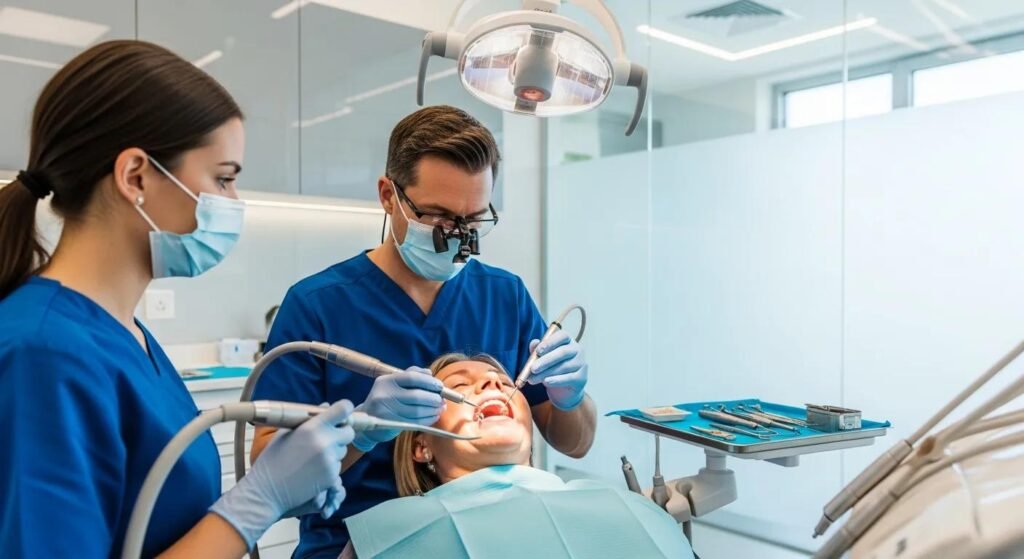
The process begins with an evaluation and treatment plan. The implant post is surgically placed in the jawbone, followed by a healing period for osseointegration. After healing, a custom crown completes the restoration.
Benefits of Choosing Dental Implants for Tooth Replacement
Implants provide a natural appearance and feel, often lasting 15–25 years or longer with proper care. They help preserve jawbone volume, maintain chewing efficiency and speech, and improve overall quality of life. Outcomes remain influenced by patient and clinical factors.
Long-Term Success Rates of Dental Implants
revealed high success rates and long-term survival of dental implants, failures and complications can occur. This review aims to compare the long-term outcomes of preserving natural teeth over the long-term, instead of immediately replacing teeth with dental implants.
Influence of bone density on implant stability parameters and implant success: a retrospective clinical study, I Turkyilmaz, 2008
Who Is a Suitable Candidate for Dental Implants in Fontana?
Many patients can benefit from implants, but ideal candidates have good oral health, adequate bone density, and a commitment to oral hygiene. Age and general health are considered, and a detailed consultation determines individual suitability.
Patient evaluation and bone density are important predictors of implant success.
Patient Candidacy & Bone Density for Dental Implants
Treatment planning for dental implants requires a thorough evaluation of the patient’s general and oral health, playing a crucial role in choosing the ideal candidate. Bone density classification categorizes bone density into four types, influencing implant success.
PATIENT REQUIREMENTS FOR IMPLANT SELECTION, V Budu, 2022
Evaluating Patient Eligibility and Consultation Process
The consultation includes a dental exam, X-rays and, when indicated, 3D imaging to assess bone structure and density. The dentist reviews goals, explains options, and tailors recommendations to the patient’s clinical needs.
Accurate bone-density assessment at this stage supports primary implant stability and long-term success.
Bone Density’s Impact on Dental Implant Success
CT is a useful tool to determine the bone density in the implant recipient sites, and the local bone density has a prevailing influence on primary implant stability, which is an important determinant for implant success. The use of dental implants to restore missing teeth has become increasingly widespread over the past two decades.
Influence of bone density on implant stability parameters and implant success: a retrospective clinical study, I Turkyilmaz, 2008
Role of Implant Specialists at Dental Care of Rialto
At Dental Care of Rialto, implant specialists create individualized treatment plans and guide patients through each stage of care. Their training in prosthodontics and implantology supports evidence-based treatment and patient comfort.
Understanding Costs and Financing for Dental Implants
Costs vary with the number of implants, case complexity, and materials. Discussing options with the dental team yields a clear estimate tailored to the case.
Typical Pricing for Dental Implant Treatments
Average costs commonly range from $3,000 to $5,000 per implant, often covering the surgical procedure, implant post, and final crown. Additional procedures like bone grafting or sinus lifts raise costs when needed.
Available Payment Plans and Insurance Considerations
Many practices, including Dental Care of Rialto, offer financing to spread costs. Some dental insurance may cover portions of treatment; patients should verify benefits and discuss payment options with the office.
How Do Patients Recover and What Aftercare Is Required?

Recovery requires careful aftercare. Patients may have swelling and discomfort managed with medications and over-the-counter analgesics. Adhering to aftercare instructions supports healing and implant success.
Expected Recovery Timeline and Care Instructions
Initial soft-tissue healing usually takes 1–2 weeks; during this time maintain oral hygiene, avoid hard foods, and attend follow-ups. Osseointegration typically completes in 3–6 months depending on individual healing.
Patient Testimonials and Success Stories from Fontana
Many patients report improved function, confidence, and satisfaction with their appearance after implant treatment, reflecting the positive daily impact of well-planned care.
Frequently Asked Questions
1. What are the potential risks associated with dental implants?
Risks include infection at the implant site, nerve injury, and sinus complications when implants encroach on the sinus. Incorrect placement can cause failure. Choosing an experienced clinician and attending follow-ups reduces risk.
2. How long do dental implants typically last?
With good oral hygiene and regular dental care, implants commonly last 15–25 years or longer. Smoking and irregular dental visits can shorten lifespan.
3. Can dental implants be placed immediately after tooth extraction?
Immediate placement is possible in select cases but depends on the extraction-site condition, bone quality, and tissue health. A clinical evaluation determines suitability.
4. What types of dental implants are available?
Common types include endosteal implants (in the jawbone) and subperiosteal implants (under the gum above bone). Mini implants are smaller options for specific situations; choice depends on clinical needs and bone conditions.
5. How does bone density affect dental implant success?
Adequate bone density is essential for stability. When volume is low, bone grafting may be required before placement. Imaging helps assess bone quality and plan treatment.
6. Are there age restrictions for getting dental implants?
There are no strict age limits. Candidates should have fully developed jawbones (usually post-adolescence). Older adults may be suitable if in good health with sufficient bone support.
7. What should I expect during the initial consultation for dental implants?
The dentist performs an oral exam, reviews medical history, and obtains X-rays or 3D imaging to evaluate bone structure. The visit covers treatment goals, options, and expected outcomes and is a chance to ask questions.
Conclusion
Dental implants are a reliable option to restore function and appearance after tooth loss. They offer durability, a natural look, and oral-health benefits. Schedule a consultation with our experienced team to determine whether implants are right for you.