
The Full Mouth Restoration Journey
Transform Your Smile: Dental Implants & Restoration
Full mouth restoration combines procedures to restore both function and appearance. It commonly uses dental implants as a stable foundation for replacement teeth, offering a durable solution for extensive dental problems. This article outlines the restoration definition, implant stages, preparation needs, recovery expectations, and cost factors to help you evaluate comprehensive oral rehabilitation.
What Is Full Mouth Restoration and Who Is a Candidate?
Full mouth restoration treats multiple dental issues—missing teeth, decay, and periodontal disease—using implants, crowns, and other restorations to recover function and a natural appearance. The main outcome is improved oral health and quality of life, enabling patients to eat, speak, and smile with confidence.
Defining Full Mouth Dental Reconstruction and Its Benefits
Reconstruction is tailored to each patient. Key benefits include:
- Improved Aesthetics: Restorations enhance smile appearance and self-esteem.
- Enhanced Functionality: Restored ability to chew and speak comfortably.
- Long-term Durability: Options like implants offer longer-lasting results than traditional dentures.
These benefits make full mouth restoration a practical choice for patients with widespread dental issues. Dental implants in particular often improve daily function and well-being during rehabilitation.
Dental Implants & Quality of Life in Oral Rehabilitation
Bony reconstruction of jaw defects using the free fibular flap and dental rehabilitation mostly requires insertion of dental implants within the transferred fibula bone. The aim of this paper was to discuss results of the implant stability with data on the possible benefit for the patient’s quality of life after such treatment.
Oral rehabilitation with dental implants and quality of life following mandibular reconstruction with free fibular flap, 2016
Identifying Candidates for Dental Implant Procedures
Ideal candidates have substantial tooth loss or damage and are in generally good health. Key eligibility points:
- Bone Density Requirements: Adequate bone supports implants; bone grafting may be possible when bone is insufficient.
- Overall Oral Health: Healthy gums and no active infections are important before implant placement.
A clinical and radiographic evaluation by your dental professional confirms suitability and helps plan any preparatory treatments.
What Are the Key Steps in the Dental Implant Procedure for Full Mouth Restoration?
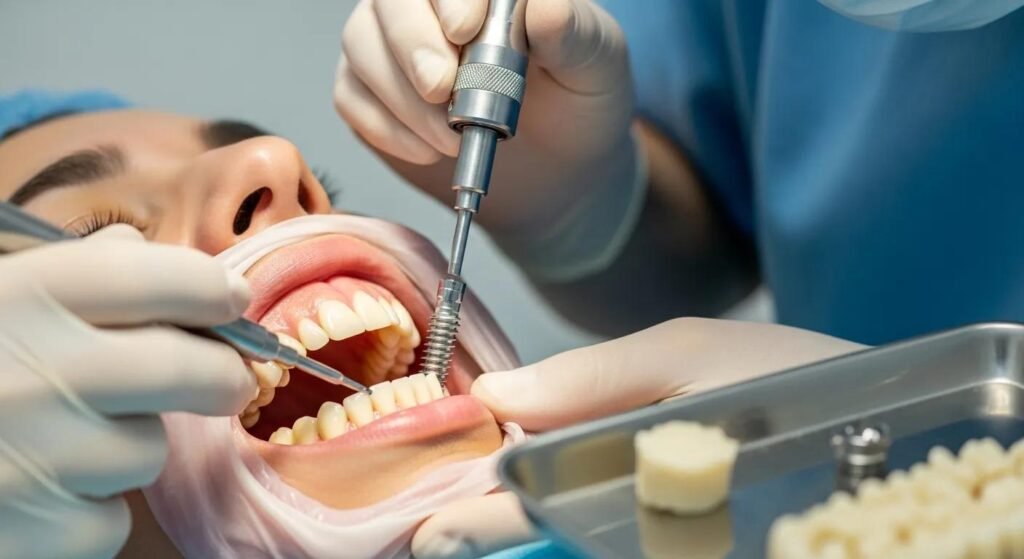
The implant pathway for full mouth restoration follows defined steps designed to support predictable, durable results.
Oral Rehabilitation Steps: From Consultation to Implant Placement
After an initial consultation and review of options, the typical sequence is:
- Treatment Planning: 3D imaging and planning determine implant positions and any preparatory needs.
- Surgical Placement of Implants: Implants are placed into the jawbone to serve as anchors for restorations.
- Healing Period: A period (commonly three to six months) allows osseointegration before final restorations.
Each stage contributes to long-term implant stability and predictable outcomes.
Advanced Implant Technologies Used in Smile Makeover Process
Modern practices use technology to improve precision and reduce recovery time. Common tools include:
- 3D Imaging: Precise mapping of jaw anatomy for accurate planning.
- Guided Surgery: Surgical guides enable minimally invasive placement and consistent positioning.
- Immediate Loading Implants: When clinically appropriate, temporary teeth may be provided the same day as placement.
These approaches can lower surgical risk, shorten recovery, and enhance both function and aesthetics.
Step-by-Step Dental Implant Process for Full Mouth Restoration
Preparation and aftercare are key to successful outcomes. Clear planning reduces risks and supports healing.
Pre-Procedure Preparation and Safety Measures
Before surgery, patients should:
- Undergo Comprehensive Health Assessments: Addressing underlying health issues improves safety and healing.
- Follow Pre-Operative Instructions: Your dentist will advise on medications, fasting, and other pre-surgery steps.
Adhering to instructions reduces complication risk and aids recovery.
Recovery Timeline and Aftercare for Dental Implant Success

Recovery typically spans several weeks. Key aftercare steps include:
- Pain Management: Use prescribed or recommended analgesics as directed.
- Dietary Adjustments: Begin with soft foods and progress as healing allows.
- Regular Follow-Up Appointments: Monitor healing and address concerns promptly.
Following aftercare instructions is critical to implant integration and long-term success. Clinical studies indicate recovery is generally manageable across patient groups.
Patient Recovery After Dental Implant Placement
A comparison of the present results to those previously obtained [14,23], reveal that dental implants lead to a similar postoperative recovery period and similar recovery [14,23].
Patients’ perception of recovery after dental implant placement, 2021
Long-term implant health also depends on a tailored maintenance protocol to prevent biological complications and preserve implant survival.
Essential Dental Implant Maintenance & Aftercare
As increasing number of dental implants are being placed in the general population, the need to develop a maintenance protocol that caters to the needs of the patients has become essential. Historically, dental implants were predominantly placed in the early edentulous population; however, the shift of placements to the wider population means that a patient-focused approach to peri-implant maintenance therapy (PIMT) and the effect this has on biological complications and implant survival need to be considered.
Implant Maintenance and Aftercare, C Barclay, 2024
What Are the Cost Considerations and Financing Options for Comprehensive Dental Restoration?
Costs vary with case complexity, materials, and required procedures. Typical cost components include consultation, surgical fees, and restorative materials. Discuss these items with your provider to get a clear estimate.
Understanding the Costs Involved in Full Mouth Dental Reconstruction
- Consultation Fees: Initial exam and planning.
- Surgical Costs: Implant placement and any preparatory procedures.
- Restorative Materials: Crowns, bridges, or prostheses.
Available Financing and Consultation Scheduling at Dental Care of Rialto
Dental Care of Rialto offers financing options to help make restoration more accessible. Schedule a consultation to review treatment and payment arrangements. For details, call (909) 879-1024 or email rialtodentalcare1@gmail.com.
| Service | Cost | Financing Options |
|---|---|---|
| Full Mouth Restoration | Varies | Flexible payment plans available |
| Dental Implants | Varies | Financing through third-party providers |
| Consultation | $100 | Applied to treatment cost if proceeding |
Frequently Asked Questions
1. How long do dental implants last?
With proper oral hygiene and regular exams, implants commonly last 10–15 years or longer; many function for 20+ years.
2. What are the risks associated with dental implant surgery?
Risks include infection, nerve injury, and sinus issues. Careful planning and experienced clinicians reduce these risks.
3. Can anyone get dental implants?
Not everyone qualifies. Candidates should be in good general health with adequate bone and healthy gums; some medical conditions must be managed first.
4. How do I care for my dental implants after placement?
Care mirrors natural teeth: brush and floss daily, avoid very hard foods during early healing, and attend regular check-ups. Follow your dentist’s specific instructions.
5. What is the difference between dental implants and dentures?
Implants are fixed, surgically anchored in bone and offer superior stability and function. Dentures are removable and rest on the gums.
6. How much does full mouth restoration typically cost?
Costs vary widely by complexity and materials. Discuss potential ranges and itemized costs with your provider to understand the total investment.
7. Are there financing options available for dental implants?
Yes. Many practices, including Dental Care of Rialto, offer flexible payment plans and third-party financing. Ask about options during your consultation.
Conclusion
Full mouth restoration with dental implants can restore appearance and function with durable results. Understanding the pathway, preparation, and costs helps you make an informed decision. Contact our team to schedule a consultation and begin the process toward a confident, functional smile.